Does my panel need upgrading for an EV charger?
How to check whether your existing panel can handle an EV charger, what a load calculation actually tests, and when an upgrade is genuinely necessary.
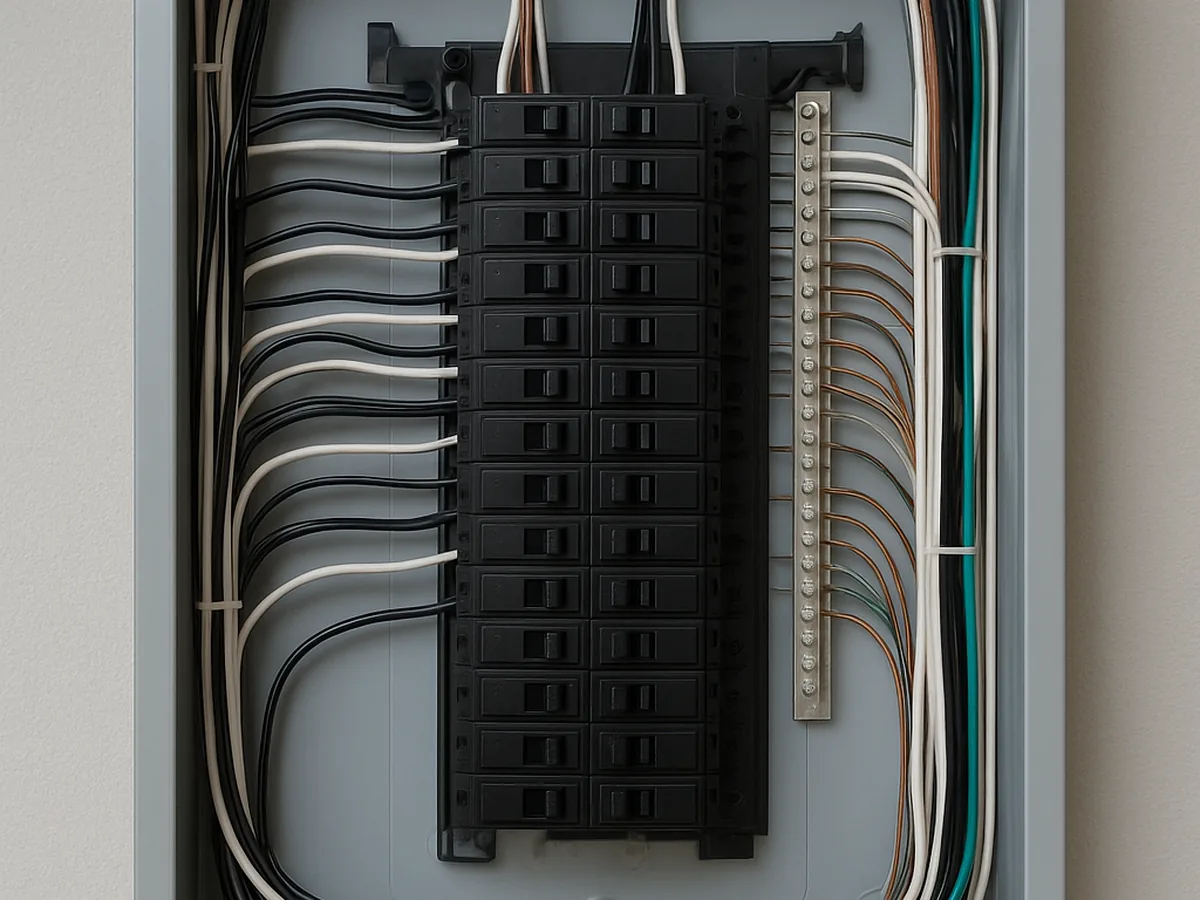
Start with three questions
- What does the main breaker say — 100A, 150A or 200A?
- Is your heating gas or electric?
- Are there two spare full-size breaker slots?
A 200A panel in a gas-heated home with spare slots is almost always fine. A 100A panel in an all-electric home almost always is not. Everything between needs the calculation.
Why the panel label is not the answer
The rating tells you what the service can carry, not what is already spoken for. A load calculation adds up the demand your home is designed for and checks whether a 48A continuous load still fits. Two identical 200A panels in two identical houses can give opposite answers depending on whether the heating is a heat pump or a furnace.
Three ways to avoid an upgrade
- Charge at 32A instead of 48A. Still a full overnight charge for nearly every EV, and it often fits within existing capacity.
- Install a load-management device. It throttles the charger when the rest of the house is drawing heavily. Cheaper than a service upgrade by a wide margin.
- Share an existing circuit with a dryer or range where the layout allows it.
Ask to see the load calculation. If an electrician recommends a $3,000 upgrade without producing one, get a second opinion. It is the difference between an assessment and a sales pitch.